Understanding Bathroom Redesign: Layout Planning, Cost Ranges, and Practical Decisions for Homeowners
A bathroom redesign is usually about more than visual change. People often want better lighting, improved ventilation, safer surfaces, and a layout that works smoothly during busy mornings. Many are unsure which upgrades truly matter, how costs are structured, and how much disruption a project may involve. This guide explains the process step by step so readers can understand realistic options and planning factors.
What Bathroom Redesign Includes
Some assume bathroom redesign only means replacing tiles and fixtures. The scope can range from cosmetic updates to layout reconfiguration.
Surface-level bathroom redesign may include new paint, vanity replacement, mirror upgrades, lighting fixtures, and updated hardware. These improve appearance without moving plumbing.
Mid-level redesign often involves replacing flooring, installing a new shower or tub, and upgrading toilets or sinks while keeping plumbing locations mostly unchanged.
A full bathroom redesign may involve relocating drains, adjusting wall structures, expanding shower areas, or improving ventilation systems. These changes typically require more planning and may involve permits depending on local regulations.
Clarifying the level of change helps homeowners align expectations with budget and timeline.
Layout Planning for Daily Use
Layout is central to any bathroom redesign. Even small adjustments in fixture placement can affect how spacious the room feels.
In compact bathrooms, wall-mounted vanities or corner sinks can create better floor flow. In larger bathrooms, separating wet and dry zones helps manage moisture and organization.
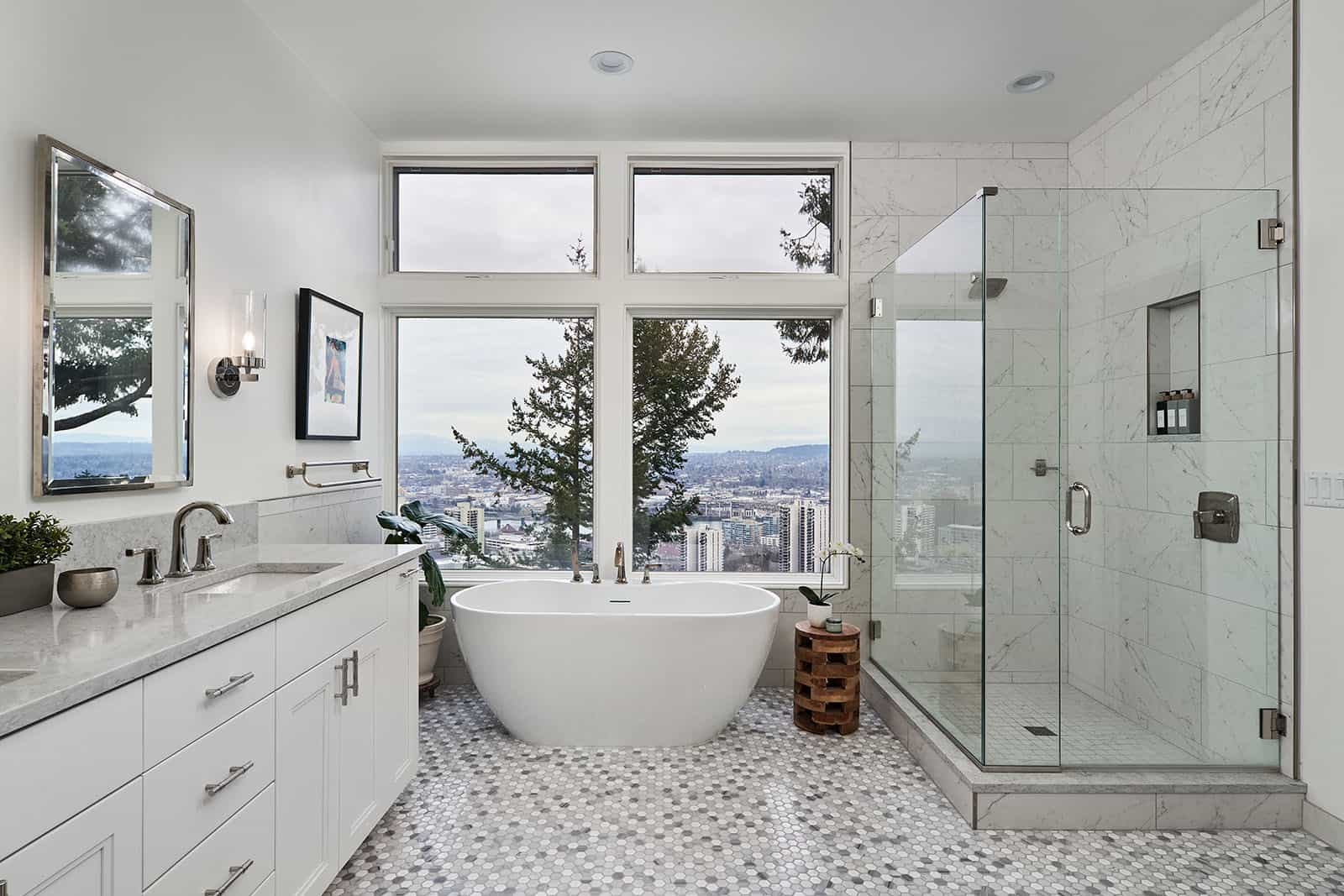
Shower design is another key element. Walk-in showers with glass panels create visual openness, while enclosed designs may offer more heat retention. Storage niches inside showers are often included in modern bathroom redesign plans to reduce clutter.
Door swing direction, drawer clearance, and towel placement also influence comfort. Thinking about how people move in and out of the space during peak hours helps guide layout choices.
Materials and Moisture Considerations
Bathrooms face constant humidity, so material selection is especially important in bathroom redesign projects.
Porcelain and ceramic tiles are commonly used due to water resistance. Larger tiles can reduce grout lines, which some homeowners find easier to maintain. Slip-resistant flooring surfaces are often preferred to improve safety.
Vanity materials should handle moisture exposure. Engineered stone countertops and sealed surfaces are often selected for easier maintenance. Mirror cabinets can add storage without increasing footprint.
Ventilation plays a major role in preventing long-term moisture buildup. Many bathroom redesign plans include upgraded exhaust fans with appropriate airflow capacity to support indoor air quality.
Lighting and Electrical Planning
Lighting affects both functionality and atmosphere in a bathroom redesign. A single ceiling light may create shadows around the mirror. Layered lighting—overhead, task lighting near mirrors, and soft ambient lighting—usually creates more balanced visibility.
Electrical planning may also include additional outlets near vanities, heated flooring systems, or integrated lighting in mirrors. These elements depend on user preference and local electrical standards.
Because bathrooms combine electricity and water, professional planning and installation are often required for safety compliance.
Understanding Cost Ranges
Cost is a major consideration when researching bathroom redesign. Instead of a fixed number, expenses usually fall within ranges depending on size, material selection, and structural complexity.
A cosmetic bathroom redesign with surface updates typically falls in a lower cost range. Replacing fixtures, flooring, and vanities without moving plumbing often requires a mid-level budget. Layout changes, custom showers, or plumbing relocation generally increase costs due to labor and technical work.
Unexpected expenses may arise if hidden water damage or outdated wiring is discovered. Many planning guides suggest reserving a contingency range to accommodate such findings.
Because pricing varies by region and contractor experience, homeowners often compare multiple proposals and review detailed scope descriptions.
Timeline Expectations
Bathroom redesign timelines depend on scope and material lead times. Smaller updates may take several weeks, while full redesigns with custom elements can extend longer.
Material delivery delays, inspection requirements, and design changes during construction can affect schedules. Households usually plan for temporary bathroom arrangements if only one bathroom is available.
Completing design decisions before construction begins often helps reduce delays.
Working With Designers and Contractors
Homeowners exploring bathroom redesign often wonder who to consult first. Designers typically assist with layout planning, material coordination, and visual concepts. Contractors manage construction, installation, and compliance with building codes.
Some homeowners take short home design courses or renovation planning workshops to better understand terminology and construction stages. Educational resources from design schools or online platforms can provide basic insight into space planning and materials, helping homeowners communicate more clearly with professionals.
Clear discussion of budget ranges, storage challenges, and maintenance preferences can lead to more practical design proposals.
Common Mistakes to Avoid
One common issue in bathroom redesign is focusing on appearance while overlooking ventilation. Without proper airflow, moisture can affect materials over time.
Insufficient storage is another challenge. Adding recessed cabinets or vanity drawers can help manage everyday items.
Choosing materials without considering slip resistance or cleaning effort may also affect long-term satisfaction. Planning lighting early rather than as an afterthought often improves results.
Deciding If Bathroom Redesign Is Necessary
Not every bathroom issue requires a full bathroom redesign. Sometimes replacing fixtures, improving lighting, or upgrading ventilation can address daily discomfort.
However, when layout limitations, aging plumbing, or persistent moisture concerns exist, a structured bathroom redesign plan can provide clearer direction. Understanding layout principles, cost ranges, and material performance helps homeowners approach planning discussions with realistic expectations.